Popular War Politics TV Shows - Page 106

Décolonisations : du sang et des larmes
2020
star 8After World War II, the French colonial empire, which dominated the lives of over 110 million people on five continents, collapsed in just under a quarter century of blood and tears.High School Radical
2025
High School Radical
2025
star 8At 16, Max left with dreams and a GoPro slung over his shoulder for an exchange program at a high school in Oklahoma. Since then, Donald Trump has become president, the Capitol has been stormed, and abortion bans have gained ground. On the eve of Trump’s second term, Max goes back to see his friends to understand what their journeys reveal about the evolution of American society.Border Warfare
1990
Border Warfare
1990
A three-episode mini-series chronicling the history of Scotland from ancient times through the union with England and culminating with the rise of Thatcherism and the introduction of the Poll Tax.OCCRP
2024
Battlefield: Vietnam
1999
Evig Heder
1995
Pimedad aknad
1969
The Masters of the Reich
2021
star 7.3This series gives a new life to silent archives. It shed new light on WWII and the preceding years by revealing what the masters of the Reich and their acolytes were really saying to each other while being filmed, thinking no one could hear them. Surprising or trivial, mundane or astonishing, their words now deciphered give a new perspective on these historical archives and get us closer to the harsh reality of these tragic days.Jurus Halilintar
2004
The Volunteers
2017
The Volunteers
2017
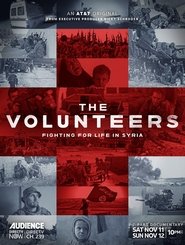
Cameraman River Haag travels to war-torn Syria, documenting stories of the worst humanitarian crisis since WWII. After meeting a medical unit of passionate volunteers, River finds himself forced by conscience to use his own military medical training to join the YPG in the fight against ISIS, providing treatment to civilian casualties of war, as well as Kurdish, Arab, and even ISIS fighters.Brama Kumbara
2013
Chartrand et Simonne
2000
Chartrand et Simonne
2000
star 8Chartrand et Simonne is a French-Canadian television mini-series which aired in 2000, exclusively on Radio-Canada. The series originally only had two parts but it was expanded into 6 parts and re-aired in 2003 on Télé-Québec. Currently, Télé-Québec airs the program on a regular basis. The series won a Gemini Award in 2000 for Best Make-up/Hair.UpFront
2015
UpFront
2015
With the thrust and parry of rigorous debate, Mehdi Hasan cuts through the headlines to challenge conventional wisdom, highlight contradictions and uncover double standards.Min fars krig
2020
Min fars krig
2020
The Longest Night
2021
The Longest Night
2021
On the eve of the second Passover holiday, a squad of five commandos from the PFLP cuts the northern border fence and penetrates into Kibbutz Misgav-Am. Their mission is to take hostage the Kibbutz members in order to negotiate the release of prisoners held in Israeli jails. But that night, most Kibbutz members are away on a concert and the Kibbutz is half empty, a light comes on in one of the small kibbutz houses, making it the target for the commandos to break into. When they realize this is not a family home but rather the dormitory for the very young children of the kibbutz, it's already too late.The Great War in Numbers
2017
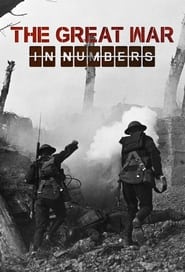
star 7.7The Great War in Numbers tells the complete story of World War I - from outbreak to conclusion - and the fragile peace that followed. It was a war unlike any other before it, with a number of firsts along the way. Seventy-milliion men were mobilised to fight around the world, from the trenches of the Western Front to the Middle East and Africa.