Popular Documentary TV Shows - Page 28

World War II in Colour
2009
star 7.6World War II In Colour is a 13-episode television documentary miniseries recounting the events of World War II narrated by Robert Powell. The show covers the Western Front, Eastern Front, and the Pacific War. It is on syndication in America on the Military Channel. This series is in full color, combining both original and colorized footage.Doc humanité
2018
Doc humanité
2018
A program featuring independent documentaries produced in Canada and abroad exploring regional, provincial, national and international perspectives. Through these films, Doc humanité seeks to reveal, share, show and explain the big issues of our time in all spheres of human endeavour and contribute to an improved understanding of Canada’s place in the modern world.Journey to the Microcosmos
2019
star 7Take a dive into the tiny, unseen world that surrounds us! With music by Andrew Huang, footage from James Weiss, and narration by Hank Green, we want to take you on a fascinating, reflective journey through the microcosmos.Lebensläufe
1998
Lebensläufe
1998
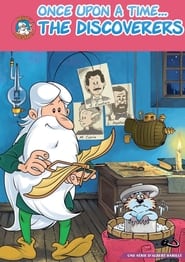
Once Upon a Time... The Discoverers
1994
star 7.6From flashes of genius to curious experiments, humankind's innovations lead explorers and inventors on a brilliant journey of discovery in this series.Breakfast in China
2019
Breakfast in China
2019
star 8The documentary by gourmet Shen Hongfei, Chen Xiaoqing as the general counsel; Visit the streets, smell and taste, with simple images and family taste, looking for authentic Chinese breakfast. Each episode features a traditional breakfast, an interesting shop, a group of self-indulgent diners, and the owner's "breakfast philosophy."Hometown Stories
2011
Hometown Stories
2011
Stories about people, stories about life. Intimate portraits of people from around Japan, each leading diverse lives while enriching lives of others.The Playboy Murders
2023
The Playboy Murders
2023
star 7.6Investigating murders that intersect with Playboy, exposing the pitfalls of fame for those appearing on their pages and forcing audiences to question everything they thought they knew about one of America's most recognizable publications.Legends of Railroad
2013
Legends of Railroad
2013
star 10Japanese railroads documentary series. Each episode presents an important train model, line, or station. Full of historical and engineering information, this program reflects on 150 years of rail transport in Japan.Station 2
2008
Station 2
2008
star 8Denmark's most popular crime magazine, which gives viewers a unique insight into criminal Denmark.大宝荐系列
2019
大宝荐系列
2019
China
2020
China
2020
star 10Going back five thousand years, the "China" is a tragic China? The first season of the large-scale humanistic history documentary "China" will explore Chinese historical stories from the Spring and Autumn to the Tang Dynasty, digging out people and events that have a profound impact on China today, telling Chinese stories, spreading the voice of China, and showing the great evolution of Chinese civilization.中外历史纪录片
2012
中外历史纪录片
2012
Diary
2000
Diary
2000
Diary is an American documentary television series that premiered February 16, 2000, on MTV. The show's opening titles begin with the slogan "You think you know ... but you have no idea."Cachitos de hierro y cromo
2013
star 7.7Cachitos de hierro y cromo is a Spanish musical-themed documentary program, directed by Jero Rodríguez and hosted by Virginia Díaz. It is an unapologetic musical display of RTVE's sound legacy in the form of performances on the set of programs such as 'Aplauso', 'Galas del Sábado', 'Mapa Sonoro', 'Zona Franca' or 'Los Conciertos de Radio 3'. For nearly 60 years, artists and other specimens have stormed viewers' screens. The result is a polyphony of images and memories that includes everything from James Brown to Camela, from Perales to REM, from Gabinete to Violent Femmes. And so all the time. Our secret weapon has been the historical archive of TVE, the repository of Spanish collective memory for more than half a century.寻古中国
2023
寻古中国
2023
Newton's Apple
1983
Newton's Apple
1983
star 8Newton's Apple is an American educational television program produced and developed by KTCA, and distributed to PBS stations in the United States that ran from 1983 to 1999. The show's title is based on the rumor of Isaac Newton sitting under a tree and an apple falling near him—or, more popularly, on his head—prompting him to ponder what makes things fall, leading to the development of his theory of gravitation. The show was produced by Twin Cities Public Television. For most of the run, the show's theme song was Ruckzuck by Kraftwerk, later remixed by Absolute Music. Later episodes of the show featured an original song. An occasional short feature appeared called "Science of the Rich and Famous" in which celebrities appeared to explain a science principle.13. komnata
2006
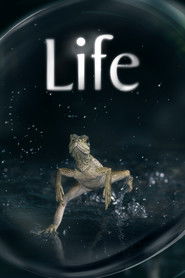
Life
2009
Life
2009
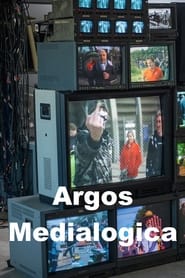
star 8.4David Attenborough looks at the extraordinary ends to which animals and plants go in order to survive. Featuring epic spectacles, amazing TV firsts and examples of new wildlife behaviour.Argos TV - Medialogic
2012
Media logic investigates the difference between image and reality. Media serve as a guide to get a grip on reality. But to what extent are they a reliable guide? How is public opinion formed? And what influence does this have on the actions of administrators, journalists and citizens?