Popular War Movies - Page 255

Po własnym pogrzebie
1992
Po własnym pogrzebie
1992
The film is a continuation of the 1984 film I died to live. Leopold Wójcik, faking his own death, returns to the underground. Unlike the previous part, the fate of the heroes is a fiction - a variant of events that could have taken place. The film had a sequel: Born for the Third Time (1989).Un fils de notre temps
2003
star 2Somewhere in Europe in the twentieth century, a young man decides to change his life by engaging in the army. A modern and quirky tale, with Jérémie Renier and Bernard Le Coq.Dignity Day
2004
Dignity Day
2004
The Egyptian navy prepares for a crucial military operation to sink the Israeli destroyer Eilat. The mission is carried out by a group of officers and soldiers, each with their own story.Alone in Berlin
2016
Alone in Berlin
2016
star 6.7Berlin in June of 1940. While Nazi propaganda celebrates the regime’s victory over France, a kitchen-cum-living room in Prenzlauer Berg is filled with grief. Anna and Otto Quangel’s son has been killed at the front. This working class couple had long believed in the ‘Führer’ and followed him willingly, but now they realise that his promises are nothing but lies and deceit. They begin writing postcards as a form of resistance and in a bid to raise awareness: Stop the war machine! Kill Hitler! Putting their lives at risk, they distribute these cards in the entrances of tenement buildings and in stairwells. But the SS and the Gestapo are soon onto them, and even their neighbours pose a threat.World War II: The War in the Pacific
2002
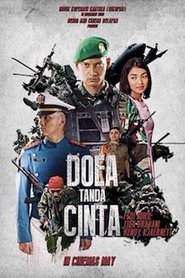
A one hour documentary which outlines the Pacific Campaign, from the fleet versus fleet conflict and the carrier war in the Coral Sea, Midway and the Marianas, through General MacArthur's Island hopping campaign culminating with the surrender of Japan.Doea Tanda Cinta
2015
Doea Tanda Cinta
2015
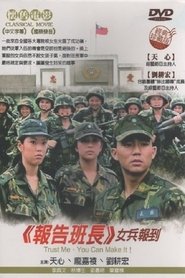
star 7A story about two young man friendship join TNI (The Indonesian National Armed Forces), especially military personnel including the Army (TNI-AD).报告班长5:女兵报到
1997
报告班长5:女兵报到
1997
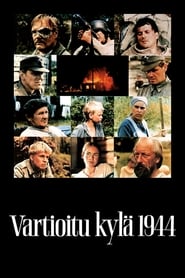
Vartioitu kylä 1944
1978
Vartioitu kylä 1944
1978
star 3.3In the summer of 1944, long-range reconnaissance soldier Jaakko Tulivaara returns to his family and girlfriend Anna for a break in his home village in Kainuu, located near the Soviet border and the war zone, which is protected from partisans by a military unit led by Sergeant Tolvanen.The Testimony
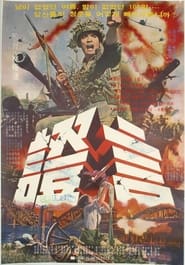
1974
The Testimony
1974
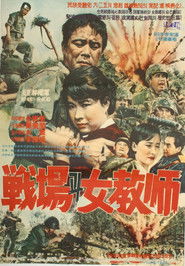
star 2.5June 25, 1950. When second lieutenant Jang has a date with his girl friend during weekend, numerous North Korean jet fighters make sudden air raids to the skies of Seoul. It is the beginning of Korean War. In spite of Korean Army's brave defense, North Korean army reddens South Korea with their state-of-the-art weapons. This movie describes the progress of war from the invasion in June 25, 1950 to the reclamation of territory on the basis of Sun-A's personal experience. Also this film reminds hard lessons from tragic history.Mashenka
1942
Mashenka
1942
star 5.5Lovely telegraph operator Masha Stepanova is a sanitary nurse. During a training alarm, she meets a taxi driver Alexei (Alyosha) Solovyov. He reads verses to a girl and invites her to the theater. But at the appointed time, Alyosha doesn't come, and Mashenka finds him, helps to recover. Young people fell in love with each other, but Alexei was too frivolous, and brings the girl a lot of sorrows and insults. Because of Alexei’s hobby for another girl, Masha breaks up with him. But she will be able to convey her faithful and true-hearted feeling through years of separation and the hardships of wartime, and when they meet again at the front of the Finnish War, Solovyov realizes what a gift of fate was meeting him with this girl.Young Eagles
2022
Young Eagles
2022
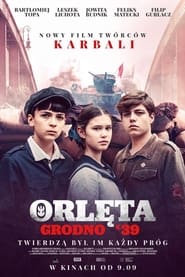
star 6.2Grodno, the eastern border of pre-war Poland. On September 1, 1939, German planes bomb the city. One of the bombs hits the school of Leoś, Ewelina and Tadek. Literally and symbolically, the world of a carefree childhood, fun and first crushes ends.Le drap bleu
2022
Le drap bleu
2022
Ezra has recently been living in a village marked by war. He meets Odelia, who works in a dyery. She has to deliver a sheet outside the village. He takes her on a scooter.Royal Vacation
1981
Royal Vacation
1981
Informative but not dramatically charged, this fictional documentary looks at an incident in 1976 when a group of dissidents were forcibly exiled to an island hotel in order to keep them silenced during the visit of King Carlos of Spain to France. This pseudo-documentary features a Canadian filmmaker who is looking into the group of dissidents. He interviews them to get the story of what happened recorded for posterity. Among the group was another man of Spanish ancestry who suddenly arrived on the island but managed to find a way out. His future exploits are brought into question since there are certain terrorist connotations to his character.Akiko's Piano: Chords Played by the Surviving Piano
2020
1940, Kawamoto Akiko lives in Hiroshima with her father and mother, Genkichi and Shizuko, as well as her two younger brothers. Akiko loves playing her favourite piano. As the war situation worsens, she is busy helping out the war efforts. On the morning of August 6, 1945, she disobeys her father and heads into the centre of town for work. In Hiroshima 75 years later, her favourite piano remains, restored and playable following its survival of the atomic bombingWhat We Are Fighting For
1943
An air raid warden demonstrates safety measures, while a refugee from Occupied Europe reveals why she came to America.End of the Road
1993
End of the Road
1993
Fan Long (played by Liang Chaowei), the staff officer of the National Army, escaped from the captive camp and returned to the National Army camp through all the difficulties. The soldier Ading (played by Lin Zhiying) also returned to the army, and the veteran Lao Xie (played by Wu Mengda) gave him the care of the Ading brother who lost his comrades-in-arms. Commander He of the National Army (played by Ke Junxiong) negotiated with the Myanmar side and tried to put down his weapons and return to it. Fan Long planned to save some of the weapons, but the Myanmar side killed the National Army. It all relied on Fan Long, and the National Army was able to break through. However, the team soon differentiated. Fan Long and others defected to the bandits, and Commander He led the rest to submit to the Thai government. The soldiers of the National Army who were exiled to the Golden Triangle launched an outstanding struggle for survivalStalingrad - Stimmen aus Ruinen
2023
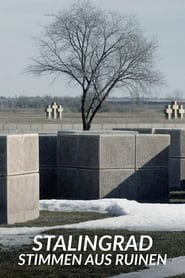
star 7.8Featuring excerpts from diaries and letters written by local residents and soldiers from both sides, the documentary tells the story of the Battle of Stalingrad through the voices of those who lived it.Kurukshetram
1977