Popular War Movies - Page 256

Battle of Mafeking
1900
We'll Go to the City
1966
We'll Go to the City
1966
star 7.2"Andremo in città" (We'll Go to the City) is a 1966 Italian drama film directed by Nelo Risi. It is based on the novel of the same name by Edith Bruck, Risi's wife. Bruck, a Hungarian concentration camp-survivor, settled in Italy after the Second World War and wrote about her experiences in autobiographical and fictional formats.[1] The film stars Geraldine Chaplin and Nino Castelnuovo.Przy torze kolejowym
1963
Przy torze kolejowym
1963
February 1943. A Jewish woman jumps out of a train and severely hurts herself. Other people arrive at the scene, but nobody is willing to help her.Attack and Retreat
1964
Attack and Retreat
1964
star 6.7Chronicle of the unheralded and unsuccessful invasion of the Soviet Union by the Italian army during World War II.To Be Twenty in the Aures
1972
star 7.5A group of refractory and pacifist Bretons is sent to Algeria. These beings confronted with the horrors of war gradually become killing machines. One of them did not accept it and deserted, taking with him an FLN prisoner who was to be executed the next day.Anzacs: In the Face of War
2011
star 5Archive footage of Australia and New Zealand forces during WW1, WW2 and the Vietnam conflict. Plus home life between the wars, especially focusing on the homage we pay to those who so bravely sacrificed themselves on our behalf. This is all held together by a wonderful script narrated by John Stanton.A Story in Red
1974
Tsili
2015
Tsili
2015
star 4.8Tsili is a young girl caught in the middle of World War II. After her family is taken to a concentration camp, Tsili hides in the forest, free from hatred and men, until the arrival of Marek, a stranger who speaks to her in Yiddish.Echoes of the Past
1971
Echoes of the Past
1971
The well-known scientist was a spy in Germany during the Great Patriotic War, and he managed to obtain information about a secret German facility.The Drummer
2014
The Drummer
2014
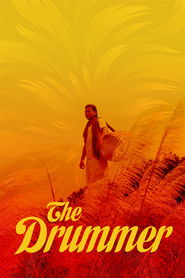
star 6.3The story of a drummer and his family during the Liberation War of Bangladesh in 1971.The King of Sniper in Northeast
2022
star 2.8This tells the story of 1931, after the "Mukden Incident" broke out, the sniper Ren Tianxing did not listen to the dissuasion and led the anti-Japanese squad to be killed in a night battle to ambush the Japanese army. Ren Tianxing was also seriously injured and was rescued by bandits. Five years later, Ren Tianxing lives in a cottage, just drinking and gambling, and happened to meet Bai Ge, his former comrade-in-arms. In order to protect Bai Ge, he decided to join the CCP underground assassination organization, to participate in the assassination of Japanese virology expert Sakamoto Ichiro, and protect the people. It was his former opponent Sorimachi Kazuya who successfully killed Ichiro Sakamoto by acting alone to protect his comrade-in-arms Ren Tianxing. However, only three people, Ren Tianxing, Baige and Lao Jiao, survived the evacuation.Mother of Mine
2005
Mother of Mine
2005
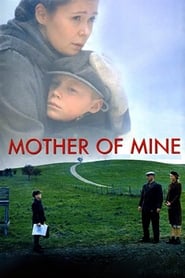
star 6.61943: Nine-year-old Eero whose father is killed during the war is brought to Sweden to foster parents to his protection like thousands of other Finnish children. Eero feels lost, particularly as his foster mother Signe behaves very unfriendly. She was expecting a little girl and still mourns for her daughter who drowned in the sea.Bučiuoju, Juozas
2023
Bučiuoju, Juozas
2023
A film about Juozas Vitkus - Kazimieraitis. “I will not leave my land - not a single step!” declares Juozas Vitkus-Kazimieraitis, Lieutenant Colonel and senior officer of the Lithuanian Army, when offered a comfortable life in the U.S. In 1945, he led armed resistance against Soviet terror in southern Lithuania, gathering thousands of men into the forest and organizing their fight according to army statutes and military principles. Over the next decade, his codified doctrine guided the partisans - and later Adolfas Ramanauskas-Vanagas - until 1956. This biographical drama, chronicles the life and legacy of Lithuania’s extraordinary freedom fighter.Such a Big Boy
1967
Such a Big Boy
1967
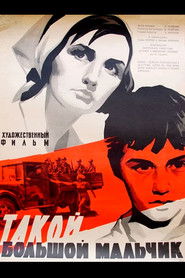
star 1In the first days of the Second World War, a young woman with three children is evacuated from the front-line zone to the Urals. After some time, she receives a funeral for her husband. But she has her little sons with her. The eldest son Kolya becomes a reliable assistant to his mother.Live and Remember
2008
Live and Remember
2008
star 5.1Based on Valentin Rasputin's story of the same title. The winter of 1945. In a village on the Angara embankment the women wait the return of their husbands from the front. The young soldier Andrei Guskov, who fled from the hospital, returns as a deserter. In his remote winter hut only his wife Nastena visits him : she is the only person whom he can trust with his life - of an eternal fugitive doomed to loneliness. Only she loves him. She lives in the present, remembers the past and does not believe in the future. She will have a child, and to the entire village she is an unfaithful wife who did not wait for her husband to return...The White Ship
1941
The White Ship
1941
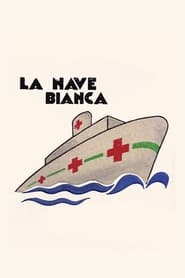
star 5.4Although released anonymously, as was the custom with all films produced by the Italian Navy, La Nave Bianca is the first feature-length effort directed by Roberto Rossellini; it is also very much the work of its co-writer and supervisor Francesco De Robertis. The film combines a documentary look at the Italian Navy during World War II with newsreel combat footage and a scripted love story performed by non-professional actors.Ruiny strelyayut...
1971
Ruiny strelyayut...
1971
star 6The plot centers on the people who began to form underground groups from the very first days of the occupation of Minsk: oil engineer Isa Kazinets, soldier Ivan Kabushkin, student journalist Vladimir Omelianuk, medical professor Yevgeny Klumov, party and Soviet worker Sergey Blagorazumov, and others. Their main weapon was their hatred of the occupiers. Soon, the underground fighters managed to establish contact with the partisans, and they began to plan joint operations.Kya Dilli Kya Lahore
2014
Kya Dilli Kya Lahore
2014
star 7.5In 1948, a cross-fire erupts at an isolated stretch of Indo-Pak border, leaving only two soldiers alive. One is an Indian soldier of Pakistani origin while the other happens to be a Pakistani soldier of Indian origin. An ironic story of pride and survival begins when - in an attempt to evade danger, they bump into each other. And amidst continuous exchange of bullets, altercations and murkier situations, it evolves into a journey of human connection with an unforeseeable end.Mons
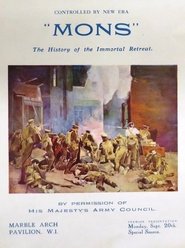
1926
Mons
1926
A reconstruction of the arrival of the British Army in France in August 1914, and of the retreat from Mons.White Light/Black Rain: The Destruction of Hiroshima and Nagasaki
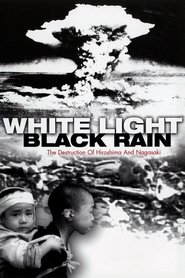
2007
star 7.5Steven Okazaki presents a deeply moving look at the painful legacy of the first -- and hopefully last -- uses of nuclear weapons in war. Featuring interviews with fourteen atomic bomb survivors - many who have never spoken publicly before - and four Americans intimately involved in the bombings, White Light/Black Rain provides a detailed exploration of the bombings and their aftermath.