Popular History Movies - Page 494

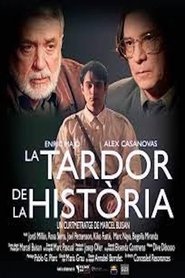
The Autumn of History
2020
Barcelona, 1992. A historian has a conversation with a mysterious man who claims that, after the Spanish Civil War, witnessed one of the darkest episodes of Franco dictatorship. The meeting soon becomes an exchange of personal memories of that year 1940, the autumn of history.Дети блокады
2008
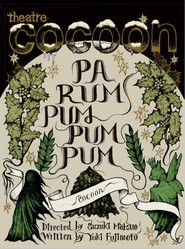
Pa Rum Pum Pum Pum
2021
Pa Rum Pum Pum Pum
2021
star 10A mystery which blurs the line between fantasy and reality. When unsuccessful teen novelist (Matsu Takako), is troubled with her latest novel, her editor is chief (Kamiki Ryunosuke) helps her write a mystery set in "A Christmas Carol" in which the Scrooge (Fumiyo Kohinata) is murdered.Just as she's about to go to sleep, relieved that she's finally finished writing, she realizes, "He's not the killer! He's not the murderer!. Just as she is about to contact her editor to rewrite the story, an incident occurs in real life.2/11 Het spel van de wolf
2014
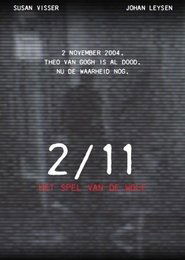
star 4.52 November 2004, shortly before nine in the morning. In The Hague, the report comes in that in Amsterdam Theo van Gogh has been murdered. All warning bells start ringing. With the country in flames, sometimes literally, politicians and officials in The Hague have to neutralise all sorts of known and unknown stings, and just when Van Gogh’s cremation seems to herald a period of relative peace, a second explosion follows: the attack on the Hofstad Network in the Laakkwartier in The Hague. A reconstruction of nine days of political high tension and flying dust, a decade after the assassination of the trendsetting filmmaker and TV presenter.Khaz-Bulat
1913
Khaz-Bulat
1913
Scenes from everyday life based on folk song. Made while filming "Conquest of the Caucasus".Plagues and Pestilence: How Pandemics Changed the World
2020
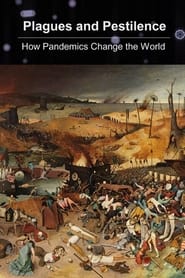
COVID-19 is far from the first pandemic to wreak havoc in the world. A long line of infectious diseases have devastated and in some cases destroyed entire societies. This documentary examines the causes of epidemics. It also sheds a light on the impact infectious diseases have had on politics and societal change. Today, the world is facing COVID-19. Measures such as quarantine and lockdowns are being rolled out in an effort to control the spread of the virus; and some are questioning how effective they are. Over the centuries, scientists managed to develop treatments and medicines to help control or even eradicate infectious diseases. Virologists are facing that task again with the coronavirus, as the world frantically searches for ways to overcome a pandemic which threatens our modern way of life.Architecture
2019
State Border: Vol. 3. Eastern Frontier
1982
star 8Chekist Olga Anisimova, who infiltrated the White Guard center in Harbin, and border guard Aleksei Mogilov prevent a number of provocations on the Chinese Eastern Railway, uncovering a conspiracy between the White Chinese and the White Guard center in Harbin.Deep Mountain Sniping
2025
In the spring of 1938, Japanese forces occupied the Jiaodong region of China. The village of Tiandao, located deep in the Kunyu Mountains, was chosen by the Japanese as a central stronghold. Lieutenant Colonel Watanabe Taro was dispatched with a unit to eliminate resistance in Tiandao Village. The village, whose inhabitants had lived as hunters for generations, faced the sudden invasion with fierce resistance, creating a heroic and fiery epic of youth amidst blood and fire.Le Louvre déménage
2020
Le Louvre déménage
2020
star 8From the evacuation of the reserves, threatened by the flooding of the Seine in June 2016, to the first transfers of works to the Louvre's conservation center in Liévin, a look back at a spectacular rescue operation.The Daughter of Darkness
2021
star 7How to understand - where is good and where is evil? Who can be trusted, and who needs to be circumvented per kilometer. Elder Ivan, who was revered as a saint, turns out to be a murderer. And the city beauty Adelaide with strange habits is a ray of light in the village kingdom. Ordinary residents, peasants and serfs of the 19th century faced a difficult choice - is everything really, as they see it, or is there something more hidden behind obvious things?Mamay
2003
Mamay
2003
star 6.2Mamay draws on traditional Ukranian and Tatar folktales for its Romeo and Juliet-like love story and parable about chivalry and the struggle for freedom. Hundreds of years ago, in the wild steppes of Crimea that form an uneasy border between East and West, Europe and Asia, nomad and farmer, the proud Cossack Mamay falls in love with the Tatar beauty Omai. The title, like the storyline, holds a variety of different meanings taken from different cultures. In Turkic languages, it means "no one," but it was also the name of a famous Mongol conqueror, the great grandson of Ghengis-Khan. In Persian legends, mamay literally means "the spirit of the steppes. "Via Gobi and Khingan
1981
Via Gobi and Khingan
1981
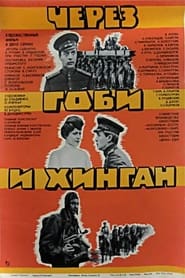
star 5About the events of the final stage of the Second World War — the defeat by Soviet and Mongolian troops of the selected Kwantung army. Bacteriological weapons were created in the laboratory of Japanese General Ishii Shiro. Experiments were conducted on prisoners of war and political prisoners. Epidemiologist Dmitry Sokolov was assigned to solve the mystery of this laboratory. At the cost of his own life, he completed the task. The march of Soviet and Mongolian formations through the Gobi sands and the Khingan spurs was not only a brilliant military operation, but also a warning of the use of bacteriological weapons by Japan.