Popular History Movies - Page 497

The Story of Wu Fong / Gijin Goho
1932
The Seediq tribe (Takasago in Japanese) of Taiwan is famous for its head-hunting rituals. A Chinese dignitary from Fujian, Wu Fong (1699-1766), tries to persuade the tribe to cease the rituals.Silver Strings
1988
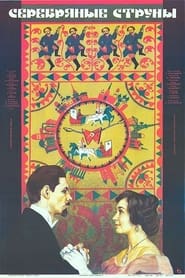
Silver Strings
1988
star 1A film based on the biography of the famous Russian balalaika player Vasili Vasilevich Andreev (1867-1918), a self-taught virtuoso musician, who brought balalaika to the concert stage.Why I'm Alive
2021
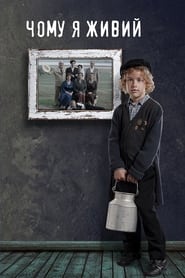
Why I'm Alive
2021
star 8.5Mariupol. Pre-war life in a small Ukrainian town on the shore of the Azov Sea, with a good family life, quarrelsome neighbors, amateur opera, denunciations to the NKVD, and a dance floor in the city garden, the persecution of religion and, of course, with love.Dramatic Passion of Algabert and Elisberth of Rodembourg
1912
star 4.5Prince Algabert, upholding the traditions of his forefathers, wages a ceaseless feud against the house of Rodembourg, whose reigning lord has one daughter, Elisabeth. One day, the Princess Elisabeth is captured by Algabert's vassals and, forgetful of feuds and quarrels, the Prince falls under the spell of her beauty. Prince Algabert, having released the Princess, goes to her father and begs for her hand, which is, however, haughtily refused. So the breach between the two houses widens. Elisabeth decides to take the veil. On the day of her renunciation Algabert makes an ineffectual attempt to see her. Then, in despair, he provokes the Rodembourgs. He meets them single-handed in the convent cloister and receives his death stroke. Elisabeth till the day of her death mourns her lover and daily tends his grave.People's Malachi
1991
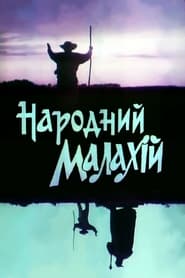
People's Malachi
1991
Based on the play of the same name by Mykola Kulish. The film is set in the 1920s and tells of a brief period of "introduction" of the Ukrainian language (Ukrainization). This is the story of one crazy person living in the same crazy world.Návrat pana Ryšánka
1971
Nail Bomber: Manhunt
2021
Nail Bomber: Manhunt
2021
star 6.5This documentary examines the 1999 London bombings that targeted Black, Bangladeshi and gay communities, and the race to find the far-right perpetrator. He terrorized a city, seeking to ignite a race war but justice was served by those who wouldn't let his hate win.Taras Tryasylo
1927
Taras Tryasylo
1927
The film is set in the 17th century, when social antagonism is at its peak. The poverty of peasants and poor Cossacks is opposed to the lavish lifestyle of the Ukrainian and Polish noblemen, priests, and Cossack officers. Cossacks fight off Tatars’ attacks, however, they start to realise that the real enemy is much closer. Taras Triasylo raises Cossacks to help the rebellious peasants. A dramatic historical narrative, masterly mass shootings of horse attacks, hand-to-hand combats and public festivities contrast with lounge scenes in the palace – balls, feasts, and entertainment of rich people and their family members wearing brocade clothes. On a grand scale and with an eye for detail, the director draws the texture of the film and its characters. The leading actors of Les Kurbas’s theatre Berezil played film protagonists. The film based on Volodymyr Sosiura’s verse novel of 1925 was considered lost for a long time.His Time Will Come
1958
His Time Will Come
1958
star 5.8Kazakh scientist and traveler, Chokan Valikhanov studied at St. Petersburg University and was well known in Russia. When sent to war against the Kazakhs, Valikhanov was forced to make a choice between Tzar and native land.Alitet Leaves for the Hills
1950
star 5.6Mark Donskoy went to the wilds of Siberia to film this Soviet movie about a community that resists the temptations of a wicked American capitalist who wants to exploit their lands.Garh Nasimpur
1968
Garh Nasimpur
1968
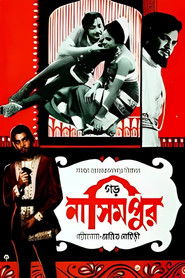
Depicted on the backdrop of 1651 when the emperor was Shahjahan and the subadar of Bengal was Shajada Suja. Amidst the conspiracies of the royalty, a young man decides to expose the schemes and reunite with his lover after the Nasimpur territory of Bengal gets occupied by a Mughal prince.Revelation of Ivan Efremov
1990
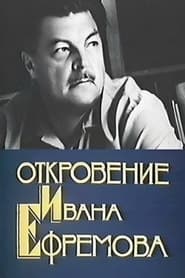
star 9About the life and work of the scientist and writer Ivan Efremov.Die Liebe und die Königin
1977
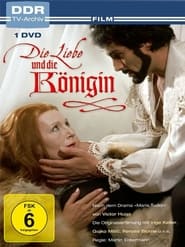
In England in 1553, the marriage of Queen Mary Tudor to the Spanish crown prince Philip II is being considered. It is Simon Renard's task to force the issue. Maria, however, has lost her heart to Fabiano, who for his part is betraying the queen and is only interested in gaining power. When his relationship with Jane becomes apparent to both her admirer Gilbert and the queen herself, intrigues begin to unfold on several levels...Qotzuñi: People of the Lake
2024
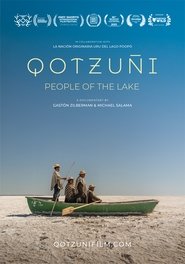
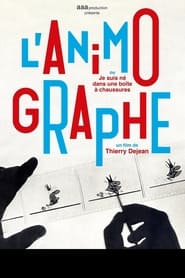
The Uru communities of Bolivia have lived on Lake Poopó for generations. Faced with its disappearance, they must grapple with what it means to be Qotzuñi, or People of the Lake, when the lake ceases to exist.The Animograph, or I Was Born in a Shoebox
2022
star 8The amazing story of the animograph, a machine created in France in the sixties by the cartoonist and self-taught inventor Jean Dejoux (1922-2015), whose creation was intended to revolutionize the animation industry.4 Presidents
2020
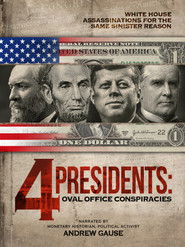
4 Presidents
2020
star 8.2What is the common thread among the only four U.S. Presidents who have been assassinated - Lincoln, Garfield, McKinley, and Kennedy? They were also the only four presidents to ever to take away money-issuing control from the private banks and turn it over to the U.S. Treasury. Within less than a year of each president doing so, they were murdered. And within months of their vice president successors assuming their offices, they returned the money issuing power back to the private banks. 4 PRESIDENTS provides the first-ever in depth analysis of this very likely - and very frightening - historic conspiracy.China, My Sorrow
1989
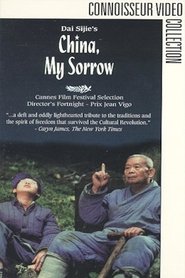
China, My Sorrow
1989
star 6.2In August 1966, the Cultural Revolution in full swing, 13-year-old Tian Ben is arrested for playing a pop record; he's sent to a remote mountain camp in Niu-Peng. There he's called "Four Eyes" and, with about 16 other older boys and men, he's made to carry muck up a mountainside, make bricks, saw logs, and sing daily to Chairman Mao of his faults. There's camaraderie among the five youths, especially with a young pickpocket named Baimao, and Tian is also drawn to a silent monk who cares for him when he falls ill and the others expect him to die. The camp is remote, so there are no fences or walls. Tian longs to escape.Secrets of China's First Emperor
2007
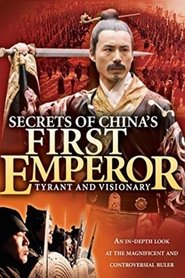
star 6.8Documentary, Historical Documentaries, Biographical Documentaries - This thought-provoking biographical program illuminates the fascinating life of Qin Shi Huangdi, "The First Magnificent Emperor of Qin," a man considered both influential and controversial in Chinese history. The ancient emperor's long list of accomplishments includes planning the construction of China's first Great Wall, building the world's largest burial site guarded by the famous Terracotta Army and amassing the most expansive empire of his time.Inca Gold
1943
Inca Gold
1943
Legends associated with the lost treasures of Incan gold, thought to be located at the bottom of one of the many shafts of what is called the hawk's nest above the city of Cusco, Peru are presented. These stories begin in 1531 with the arrival of explorer Francisco Pizarro, under the direction of King Charles V of Spain, Pizarro who is in search of the gold associated with the legendary El Dorado. Pizarro holds captive the Emperor of the Incas, Atahualpa, to discover the location of the gold. Atahualpa, in turn, promises a cave full of gold for his release. Receiving some gold, Pizarro, not trusting Atahualpa, murders him without ever finding the location of the gold, thought to be twenty thousand shiploads full, worth, in today dollars, in the billions. Legend now has it that the Incas have placed a curse on the gold to avenge Atahualpa's murder, the several attempts by outsiders to locate it leading to tragedy. Coincidence or curse?