Popular Documentary Movies - Page 272

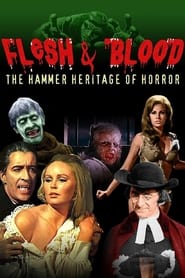
Flesh and Blood: The Hammer Heritage of Horror
1994
star 7.3Explore the most legendary horror studio of all time with this fascinating, frightening journey hosted by terror titans Christopher Lee and Peter Cushing. England's most successful independent film company, the "fear factory" of Hammer Studios, has a history filled with feuds, censorship battles and streaks of luck both good and bad. Now the legacy of horror returns, featuring interviews with such Hammer legends as Raquel Welch, Veronica Carlson, Caroline Munro, Ingrid Pitt, Jimmy Sangster, Hazel Court, Martine Beswicke, Freddie Francis, Val Guest and Ray Harryhausen. Plus you'll be treated to behind-the-scenes home movies and nonstop shock scenes from over 40 classic films, including Horror of Dracula, Curse of Frankenstein, The Devil Rides Out, Curse of the Werewolf and many more! It's the definitive study of one of the greatest names in horror!With Drawn Arms
2020
With Drawn Arms
2020
star 5.4The story behind a critical moment in American history, spawning one of most iconic images of protest from the past century. At the 1968 Summer Olympics in Mexico City, the world watched as two American runners, Tommie Smith and John Carlos, took the stage as the U.S. national anthem played, raising their fists in a symbol of black struggle and solidarity.Moments of Discovery: The Making of Fried Green Tomatoes
1998
An original documentary exploring one of America's most beloved films. Take a journey with director Jon Avnet, actresses Kathy Bates, Jessica Tandy, Mary Stuart Masterson, Mary-Louise Parker, along with many others, through the experience of creating this memorable film.Wilfred Buck
2024
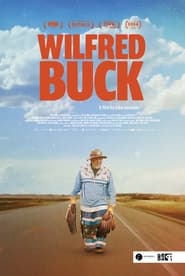
Wilfred Buck
2024
star 8Moving between earth and stars, past and present, this hybrid feature documentary follows the extraordinary life of Wilfred Buck, a charismatic and irreverent Indigenous Elder who overcame a harrowing history of displacement, racism, and addiction by reclaiming ancestral star knowledge and ceremony.Orchard Street
1955
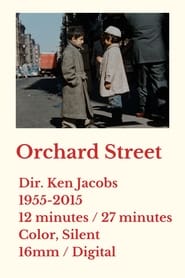
Orchard Street
1955
star 6.8This short film documents the daily life of the goings-on on Orchard Street, a commercial street in the Lower East Side New York City.Swimming to Cambodia
1987
Swimming to Cambodia
1987
star 6.9Spalding Gray sits behind a desk throughout the entire film and recounts his exploits and chance encounters while playing a minor role in the film 'The Killing Fields'. At the same time, he gives a background to the events occurring in Cambodia at the time the film was set.Treasures from the Wreck of the Unbelievable
2017
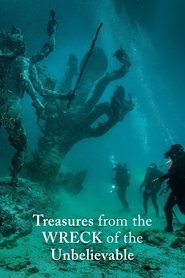
star 6This cinematic journey into the waters off East Africa chronicles the story behind artist Damien Hirst's massive exhibition of oceanic treasures.À la recherche de... Pierre Richard
2017
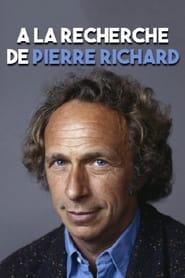
star 7Follow in the footsteps of burlesque actor Pierre Richard, a key figure in French cinema in the 1970s and 1980s.Do I Sound Gay?
2015
Do I Sound Gay?
2015
star 5.5What makes a voice “gay”? A breakup with his boyfriend sets journalist David Thorpe on a quest to unravel a linguistic mystery.Little Richard: King and Queen of Rock 'n' Roll
2023
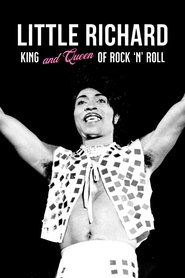
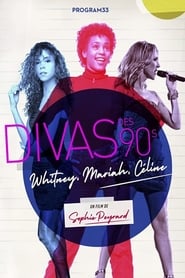
star 10Little Richard can stake a claim on having invented rock 'n' roll. A black artist who grew up in the segregated south of the United States, Richard Penniman broke down barriers and took 1950s America by storm. The Beatles and The Rolling Stones supported him and drew inspiration from his musicianship and stagecraft. He went on to influence artists as diverse as David Bowie, Elton John, Michael Jackson and Prince. Yet Little Richard spent years feeling his contribution to music had been overlooked in favour of white rock 'n' roll stars like Elvis Presley and Pat Boone. On top of that, the inner conflict between his religious beliefs and the music style he pioneered – as well as his battles with his own sexuality – led him to quit rock 'n' roll not just once, but twice.90s Divas: Whitney, Mariah, Céline
2019
star 4.9They're called the "vocal trinity": Whitney Houston, Mariah Carey and Céline Dion are the first divas of the pop era. But what defines a diva?Wide Awake
2006
Wide Awake
2006
star 5.9Filmmaker Alan Berliner chronicles his lifelong battle with insomnia in this intimate documentary. The cameras roll as he tries to quiet his overly active mind so he can get a decent night's sleep, capturing the details of what it's like to suffer from a chronic sleep disorder. As he struggles to find balance, his friends and family -- who endure the worst of Berliner's bouts with insomnia -- question whether he really wants to find a cure.The Loss of Nameless Things
2004
star 6In 1978 Oakley Hall lll was a promising playwright on the verge of national recognition when a mysterious fall from a bridge took his artistic life away. He suffered horrific head injuries, was hospitalized nearly a year and incapicitated much longer. The Loss of Nameless Things is the haunting tale of Hall's fall from grace and what happens when, twenty five years later, a theater company stages the very play he was writing the night he fell. (Bill Rose)The Adults in the Room
2010
star 2A hybrid documentary exploring the filmmaker's relationship with an older man during his teen years and his efforts in the present to turn those events into a narrative film.The Tribe Remembers
2020
The Tribe Remembers
2020
In this new program, actors Beverly D'Angelo, Don Dacus, Ellen Foley, Annie Golden, John Savage, and Dorsey Wright recall how they became involved with Hair, what it was like to work under the direction of Milos Forman, and era in which the film emerged, and how it impacted their acting ambitions and careers. (Some of Mr. Savage's comments are very emotional).Ötekiler
2016
Ötekiler
2016
The Kurdish province Van is famous for its unique cats, which are the cultural symbol of the Kurds, Turks and the Armenians. Van was the historical home of the Armenians until 1915 - the year of the genocide. Nowadays all that remains are the ruins of countless churches and a small number of inhabitants with Armenian roots, though most of them are scared to admit this. The 34-year-old Ali speaks openly about his Armenian grandmother Piroze. He accompanies us through the world of the residents, one that is filled with taboos, distrust and fear. The film tracks down the traces of this cruel history and shows that, "the past is never dead, it is not even past." (W.Faulkner)1925 Studio Tour
1925
1925 Studio Tour
1925
star 6.1A tour of the Metro-Goldwyn-Mayer Studio in 1925 shows the people who make the movies there, and gives viewers a glimpse at how movies are made.Deadly Peaks
1997
Deadly Peaks
1997
Documentaries by Katia and Maurice Krafft feature some of the amazing footage shot by the renowned volcanologists, who perished in 1991 while filming a volcano in Japan. The duo documented more active and erupting volcanos than any other scientists in the world, and their dedication shows in Deadly Peaks and Killer Volcanos, two educational films that capture the scientists on the edge of a hot ash blast and floating on a lake of sulfuric acid. The films visit Mount Kilimanjaro and examine some of the less-known dangers such as carbon monoxide gas that builds under crater-formed lakes. They also take an in-depth look at the eruption of Mount St. Helens and the lengths to which people will go to save their communities. Venturing to places where most people would never dare, the Kraffts gave their lives to promote the study of volcanos and left behind a legacy of courage in the name of science. --Shannon GeeGrand Prix: The Killer Years
2011
star 6.4In the 60s and early 70s it was common for Grand Prix drivers to be killed while racing, often televised for millions to see. Mechanical failure, lethal track design, fire and incompetence snuffed out dozens of young drivers. They had become almost expendable as eager young wannabes queued up at the top teams' gates waiting to take their place. This is the story of when Grand Prix was out of control. Featuring many famous drivers including three times world champion Sir Jackie Stewart OBE, twice world champion Emerson Fittipaldi and John Surtees OBE, this exciting but shocking film explores how Grand Prix drivers grew sick of their closest friends being killed and finally took control of their destiny.Behind Mortal Kombat 3: Into the Outworld
1995
star 6.2Behind Mortal Kombat 3: Into The Outworld was a piece of promotional material used to promote the upcoming Mortal Kombat 3. It was later included along with Midway Arcade Treasures that shipped with Mortal Kombat 3.