Popular Documentary Movies - Page 275

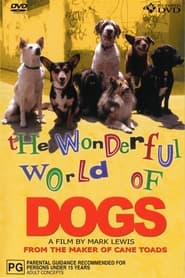
The Wonderful World of Dogs
1990
A woman obsessed by dogs crapping on her small piece of lawn. A pelican hungry enough to eat a small Chihuahua. A dog who enjoys dressing up in women’s clothing. And another with a penchant for rubber… Discover the wonderful world of dogs… barkers, bullies, crappers, and roamers. Meet Boris, Pebbles, Piglet, Molly and the delinquent dog, Fugly. Meet the people – the devoted dog-lovers and those less enthusiastic about the canine breed. The Wonderful World of Dogs looks at the myths and obsessions surrounding the domestic dog and their doting owners. A story about dogs who just want to be dogs and people who want their dogs to be just like people.Rok stalinské epochy
1951
Rok stalinské epochy
1951
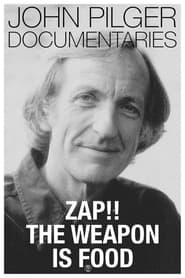
Zap!! The Weapon Is Food
1976
In the first of a trilogy of documentaries made in the United States, John Pilger reveals American Secretary of State Henry Kissinger’s policy of refusing aid to countries that do not support his government in the United Nations and the existence of a “Zap Office” – officially, the Office of Multilateral Diplomacy – specially set up in the State Department to monitor voting patterns.Santa subito
2019
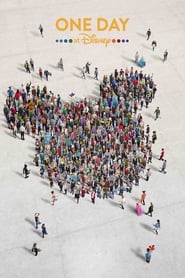
One Day at Disney
2019
One Day at Disney
2019
star 6.9Discover the inspiring personal stories of the people behind the enduring magic of Disney.Signals Through the Flames
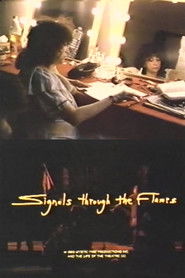
1983
Signals Through the Flames is at once a history and a celebration of the Living Theatre. Founded in the late 1940s by husband-and-wife performers Julian Beck and Judith Malina, the Living Theatre was for many years the predominent American outlet for the avant-garde movement. There were occasional self-imposed exiles to Europe in the 1950s and 1960s, but the group returned full-force during the Aquarius Age to entertain a new generation of theatregoers.Making of Death Note
2009
The Cost of Living: Creating the Prowler
2011
The documentary covers the origins, history and curious stories behind the production along with a perceptive reading of the film.New Music: Sounds and Voices from the Avant-Garde New York 1971
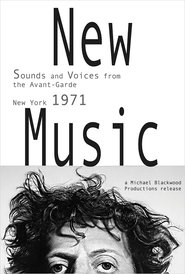
1971
With participation of John Cage, Earle Brown, David Tudor, Gordon Mumma, David Behrman, Max Neuhaus, Morton Subotnik, Phil Corner, Joe Jones, Alvin Lucier, Steve Reich, Philip Glass, Ben Patterson, Wolf Rosenberg In 1971 we produced, in association with West German Television, a documentation on New York’s musical avant-garde. It was broadcast only in Germany at the time. By 2010, after nearly 40 years, it seemed desirable to recycle the performances and interviews with the composers and to create a revealing look back to those years for English-speaking New Music fans. The film offers valuable insights into the nature and issues of advanced composition at the beginning of the 1970s.The Image Book
2018
The Image Book
2018
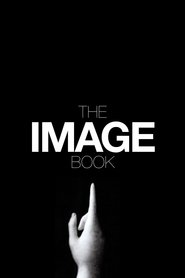
star 6.4In Le Livre d’Image, Jean-Luc Godard recycles existing images (films, documentaries, paintings, television archives, etc.), quotes excerpts from books, uses fragments of music. The driving force is poetic rhyme, the association or opposition of ideas, the aesthetic spark through editing, the keystone. The author performs the work of a sculptor. The hand, for this, is essential. He praises it at the start. “There are the five fingers. The five senses. The five parts of the world (…). The true condition of man is to think with his hands. Jean-Luc Godard composes a dazzling syncopation of sequences, the surge of which evokes the violence of the flows of our contemporary screens, taken to a level of incandescence rarely achieved. Crowned at Cannes, the last Godard is a shock film, with twilight beauty.Pea Soup
1979
Pea Soup
1979
star 5Images and sounds are spliced together in this journey to the heart of the political, economic and cultural oppression of the Quebec people. A reflection on neo-colonial exploitation and the cancer of alienation. To the very Canadian multiculturalism of Trudeau and the métissage of the multinationals, celebrated by the high priests of the dominant ideology, is contrasted the idea of acculturation, even deculturation. A way of resisting as good as any other.Bo Widerberg
1977
Bo Widerberg
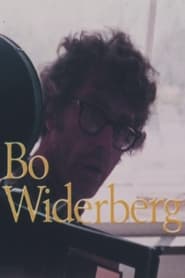
1977
Documentary which follows Bo Widerberg during the making of 'Man on the Roof', 'The Butt' and a failed theater production.Art-House America: Austin Film Society
2023
Founded by Richard Linklater in 1985 as a screening series dedicated to bringing experimental and art cinema to the city of Austin, Texas, the Austin Film Society has grown into a cornerstone of the city's creative community - while remaining true to its edgy, eclectic roots.Through the Eyes of Forrest Gump
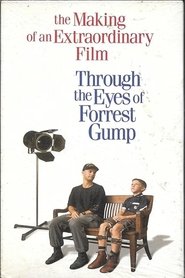
1994
star 7.5A look behind the scenes of Robert Zemeckis' 1994 Oscar-winning film, 'Forrest Gump'.Ritratti: Mario Rigoni Stern
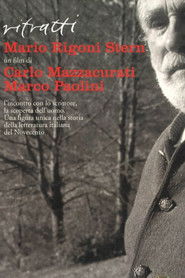
1999
Marco Paolini interviews Mario Rigoni Stern about—among other things—his well-known experience as a soldier on the Eastern front during WWII, culminating in the infamous retreat of the Italian troops, the difficult reintegration into civilian life after the war, his relationship with his literary work and with his ancestral land, the Asiago Plateau.Beethoven privat
2020
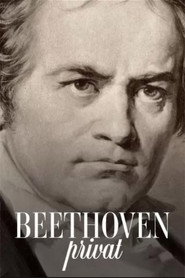
Beethoven privat
2020
To mark Beethoven's 250th birthday, the documentary sheds light on the composer's private side, linking his writings with his music in an original way. Beethoven's many letters and notes tell of his temperament, his love affairs, his humanism and his struggles, especially with the early onset of deafness.Mining Review
1948
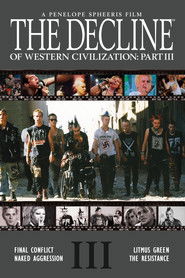
The Decline of Western Civilization Part III
1998
star 6.9A musical study of Los Angeles in the late 90s, where homeless teens roam the streets and profess to live a punk lifestyle of music, drugs, and flouting authority.Visualizing 'Carrie'
2001
Visualizing 'Carrie'
2001
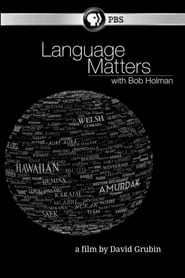
star 5.7The making of "Carrie" (1976) is presented on the film's 25th anniversary with interviews with director Brian De Palma, editor Paul Hirsch, art director Jack Fisk and writer Laurence D. Cohen. The special talks about the book transition to film and the editorial process during filming.Language Matters with Bob Holman
2015
star 10There are over 6,000 languages in the world. We lose one every two weeks. Hundreds will be lost within the next generation. By the end of this century, half of the world's languages will have vanished. Language Matters with Bob Holman is a two hour documentary that asks: What do we lose when a language dies? What does it take to save a language?